TL;DR
- Starknet averaged 127 transactions per second (TPS) on October 29, breaking the Layer-2 record for sustained TPS over 24 hours.
- Transactions on Starknet are super fast, with an average confirmation time of under 2 seconds.
- Network fees are ultra-low, averaging at $0.002 per transaction.
Introduction
Starknet has cruised through several milestones toward becoming the most performant Layer 2 (L2) network, fully prepared for mass blockchain adoption. Several tweaks have slashed fees, turbocharged transaction confirmation times, and expanded network capacity—bringing devs and users the best blockchain experience currently available. The best part? These optimizations are just the beginning.
Performance trifecta
There are generally three overarching indicators of blockchain scalability: Transaction confirmation times, transaction fees, and network capacity (throughput). Starknet excels in all three, and beats the competition in terms of throughput.
Let’s start with the latter indicator.
Starknet averaged 127 transactions per second (TPS) on October 29th. The feat was accomplished via Cartridge‘s tile-flipping game on Starknet called Flippy Flop, where players clicked to flip as many tiles as they could until their fingers went numb. (It was a lot of fun—we hope you participated.)
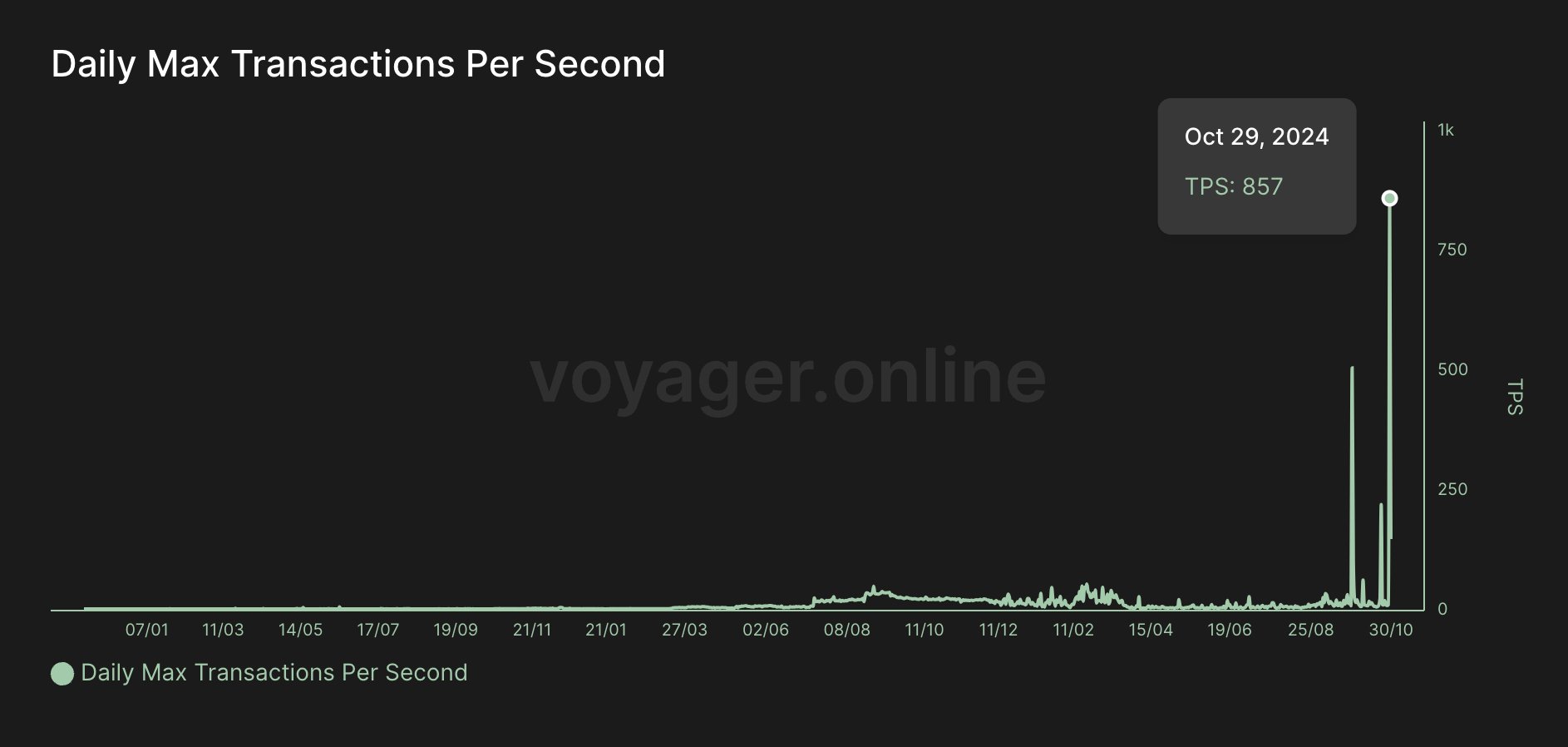
By the end of the day, Starknet broke the L2 record for sustained TPS over 24 hours, showcasing its capacity to sustain high transaction volumes.
When it comes to transaction speed, recent optimizations have made transaction confirmation time on Starknet nearly instant for most transactions—under 2 seconds! And fees? Lower than ever, averaging at just $.002 per transaction.
These feats, accomplished with a series of optimizations over recent months, indicate massive quantities of users can transact on Starknet faster and at lower costs than ever before. They position Starknet as the L2 capable of making any blockchain application economically feasible, whether it’s blockchain games, decentralized finance (DeFi) applications, or NFT platforms.
A UX success
While the purpose of this post is to zero in specifically on these massive scalability improvements on Starknet, how could we mention the Flippy Flop game without pointing to its resounding user experience (UX) success?
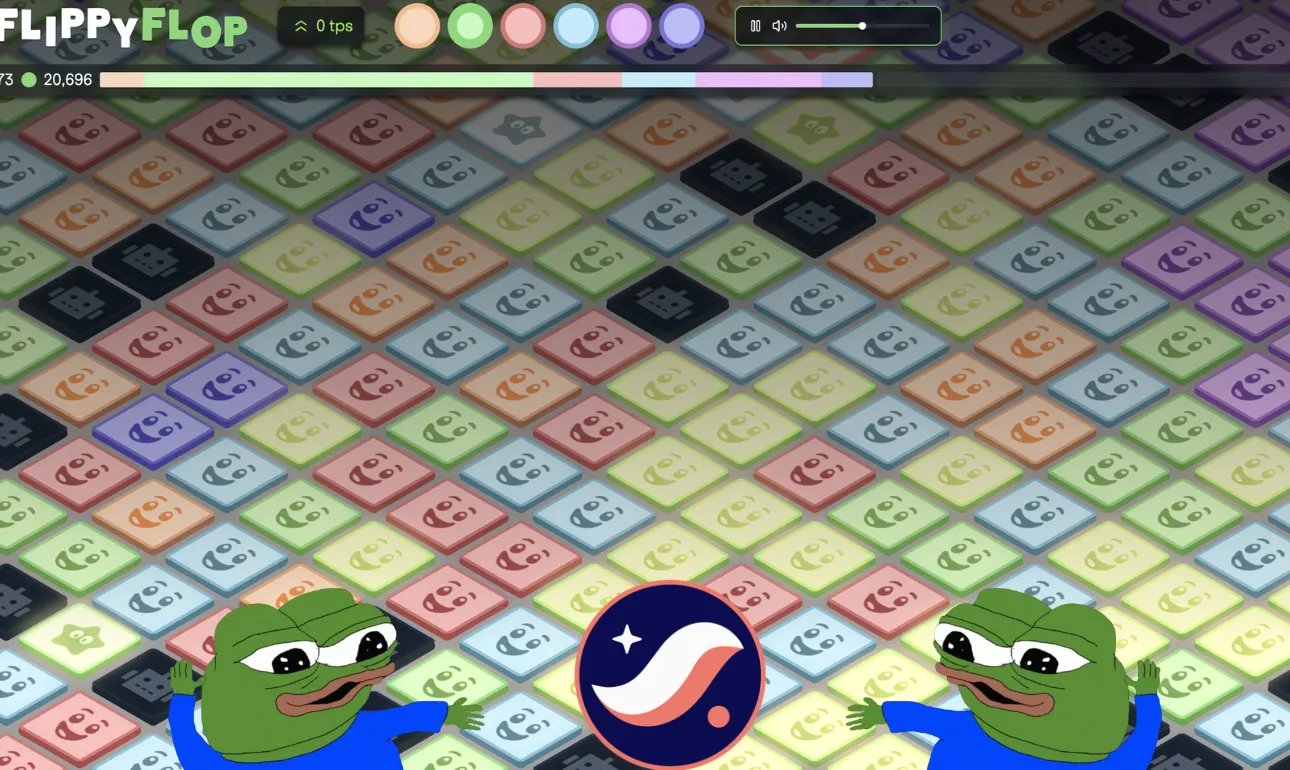
Anyone who played Flippy Flop on the 29th noticed the Web2-like gaming experience:
- No wallet needed: Thanks to Cartridge’s use of passkeys, users played Flippy Flop without the need for a wallet or seed phrase.
- Signatureless gameplay: Users played without having to sign a single transaction, thanks to Cartridge’s session keys.
- 0 fees: Thanks to Paymaster, users didn’t have to pay fees or bridge to Starknet in order to play.
All of these UX features are made possible by native account abstraction on Starknet.
How did we get here?
The impressive scalability improvements on Starknet were made possible by a series of optimizations implemented in recent months, the main of which appear in the Starknet roadmap. Before we even get into the game-changing, Starknet-specific optimizations, we’d be remiss if we didn’t mention Ethereum’s EIP-4844. Starknet enabled the blob function within a few hours of the long-awaited Dencun upgrade and was the first Layer 2 to offer a major drop in users’ fees.
On top of that, two major optimizations were implemented with the v0.13.2 upgrade, dubbed “Bolt” for its acceleration of transaction confirmation times:
- Block packing brought confirmation times down to 2 seconds for 80% of transactions and slashed fixed L1 by 2x. Block packing achieved this by decoupling L2 block frequency from L1 costs, enabling total fixed costs to drop further per user—rather than rise—as more users join the network.
- Parallel execution enabled the Starknet sequencer to execute multiple transactions that are independent of one another simultaneously. Loosely based on Aptos’s Block-STM model, Starknet’s parallel execution feature expanded network capacity even beyond current needs to support future use cases. Fun fact: Starknet was the first (!!!) L2 on mainnet to introduce parallel transaction execution.
Learn more about the 'Bolt' upgrade →
These improvements are only the beginning. Substantial upgrades in the upcoming months will push Starknet’s performance to new heights, ensuring any dApp is economically feasible, no matter the scale required.
A glimpse into the future
That’s a lot of scaling improvements Starknet has achieved, and the best part is there are plenty more on the way in our roadmap and beyond:
- Stateless compression: Maintaining low fees is a crucial part of scaling. Starknet has reached a point at which it has super low fixed costs. The introduction of stateless compression in V0.13.3 will mirror that achievement on the variable-cost front by dramatically reducing data availability (DA) costs. Slated for November, stateless compression will ensure Starknet’s fees stay low even if Ethereum blob prices spike.
- Cairo-Native integration: Starknet will integrate the Cairo-Native project by LambdaClass into the Starknet sequencer (either in V0.13.4 or after). A joint effort with Nethermind, the integration will result in a massive performance improvement and could boost TPS even past current capabilities.
- Stwo: StarkWare’s new prover is also slated for Q2 of 2025. Stwo will be the fastest prover on the market and is on track to be integrated with SHARP, the proving mechanism used by Starknet. Such an integration would dramatically reduce the cloud costs associated with proving on Starknet.

And that’s just a sneak peak—there are more improvements to come. Stay tuned for updates.
Conclusion
As Starknet continues to tick the boxes on its roadmap, users and developers will experience tangible improvements to the network’s performance. Fees will continue to drop, transactions will continue to get faster, and throughput will continue to rise. Starknet makes it possible to build and scale any application on blockchain, paving the way for mass adoption.
For updates on upcoming performance improvements, follow Starknet on X.